
Separate powered travel from hand turning
A straight powered-stage arrow, a stopped neutral stage, and a separate curved hand-turn arrow show the required handoff.
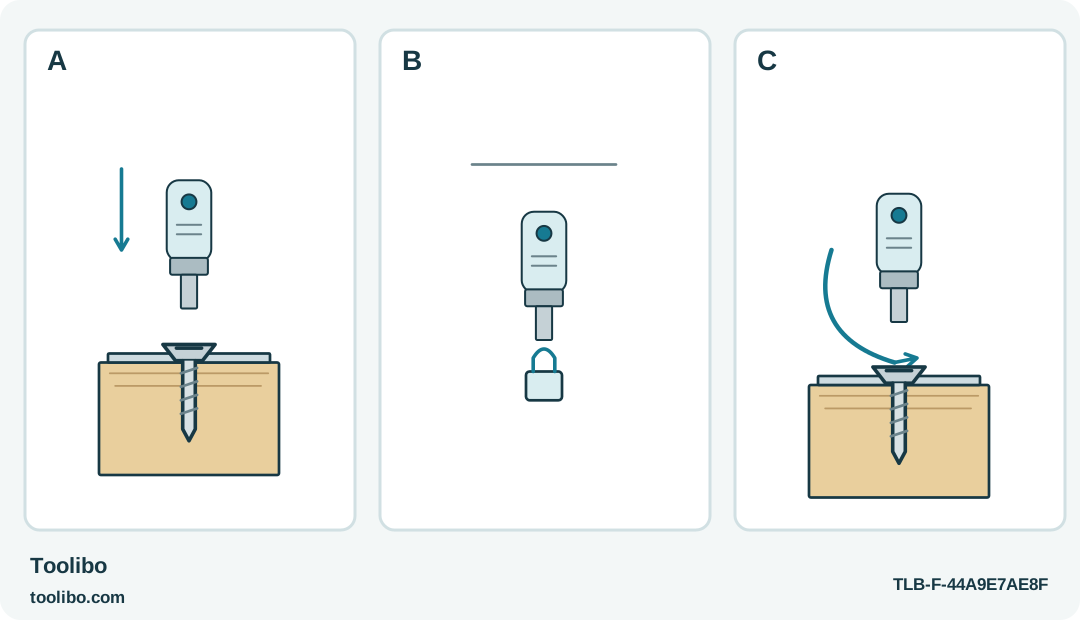
A
Use the slide control for the permitted powered stage, with a compatible fully retained bit.
B
Release the slide and wait for rotation to stop; keep the control neutral before changing grip.
C
Only then make a permitted gentle manual finish. Never run the motor during a wrist turn.
Powered travel and hand finishing are separate stages, with a stopped motor and neutral control between them.
Separate fast travel from final feel
The VESSEL 220USB-1E combines powered screw movement with hand operation. For a suitable small household fastener, the useful idea is to let the motor handle straightforward travel and then use a deliberate hand finish. It is not a reason to twist the grip harder whenever the motor slows.
This guide concerns the English export 220USB-1E, not the US 220USB-1U or another similar-looking variant. Keep the exact bit compatibility and operating limits with the tool. The familiar rounded grip can make it look like an ordinary insulated hand screwdriver, but that appearance does not authorize work on electrical equipment.
Choose an accessible, non-electrical fitting whose required screw and final position are known. Support the work and inspect the screw recess before fitting a bit. The motor cannot compensate for an incorrect screw or a joint that is already damaged.
Fit a bit that the holder actually accepts
Use only a bit with the specified mounting geometry for this 220USB-1E. Matching the width across the hex flats is not enough: the retained section and shoulder dimensions also affect whether the sleeve can lock and release correctly.
With the tool not operating and disconnected from charging, slide the sleeve forward, insert the compatible bit fully and release the sleeve. Check that the bit is retained before approaching the screw. Do not use a partly inserted bit as a way to obtain extra reach.
Keep fingers clear of the working end during the check. A bit that will not seat, lock or release normally should not be forced with the motor or modified with a file. Select the correct accessory or obtain service advice instead of turning a fit problem into a damaged holder.
Drive only the easy, controlled travel
Start the fastener squarely and seat the bit fully in the recess. Choose the correct direction and use the switch deliberately, with the tool aligned along the screw axis. Keep the work supported so you are not also trying to catch a moving part with the same hand that controls the driver.
Watch the head approach its intended seat. Release the switch before trying to add hand torque. The change between modes should be a clear pause: motor stopped, grip settled, joint inspected. Do not manually rotate the handle while electrically operating it.
If the screw binds earlier than expected, stop and find the cause. A damaged thread, unsuitable length or crooked start is not a cue to switch immediately to greater hand force. Back out or repair the setup only by a suitable controlled method, keeping the limits of the fitting in view.
Finish gently, without loading the gears suddenly
Once the motor has stopped, use a gentle hand movement if the screw still needs the small finishing adjustment permitted by its assembly instructions. Keep the bit engaged and avoid an abrupt jerk of the grip. Sudden manual loading is not a substitute for a measured, careful endpoint.
The published maximum for hand operation is a ceiling for the tool, not a target for furniture. Do not attempt to reach it by feel, and do not use the screwdriver to break loose a rusted fastener or as a pry bar. A delicate plastic boss or thin bracket may be damaged at a much smaller load.
Stop when the fitting is correctly seated and secure. If the screw continues turning without holding, the connection is damaged or unsuitable. More rotation will not restore the missing thread. If a specified tightening torque is required, use the appropriate tool and method rather than guessing through the rounded handle.
Check the result and respect protection stops
Inspect the joint and operate the fitting normally. A handle should remain aligned; a cover or bracket should not bow under its screws. Check that no bit has become loose during the work and allow hot accessories to cool before handling them.
If protection activates, or the tool produces abnormal heat or noise, stop and follow the specified recovery or service guidance. Do not keep switching between power and forceful hand rotation in an attempt to complete the same obstructed screw. The charging connection is not for operating the tool while it is connected.
Store the driver with its compatible bits identified and keep loose metal away from the charging area. The benefit of the power-to-hand approach comes from separating the two actions cleanly. Using both at once sacrifices the control that made the small driver useful in the first place.
Models referenced