
Tightening selection and reach solve different problems
Three torque-selection symbols over a joint, straight shaft reach beside an obstruction, and separated adjustment and access symbols compare the two jobs.
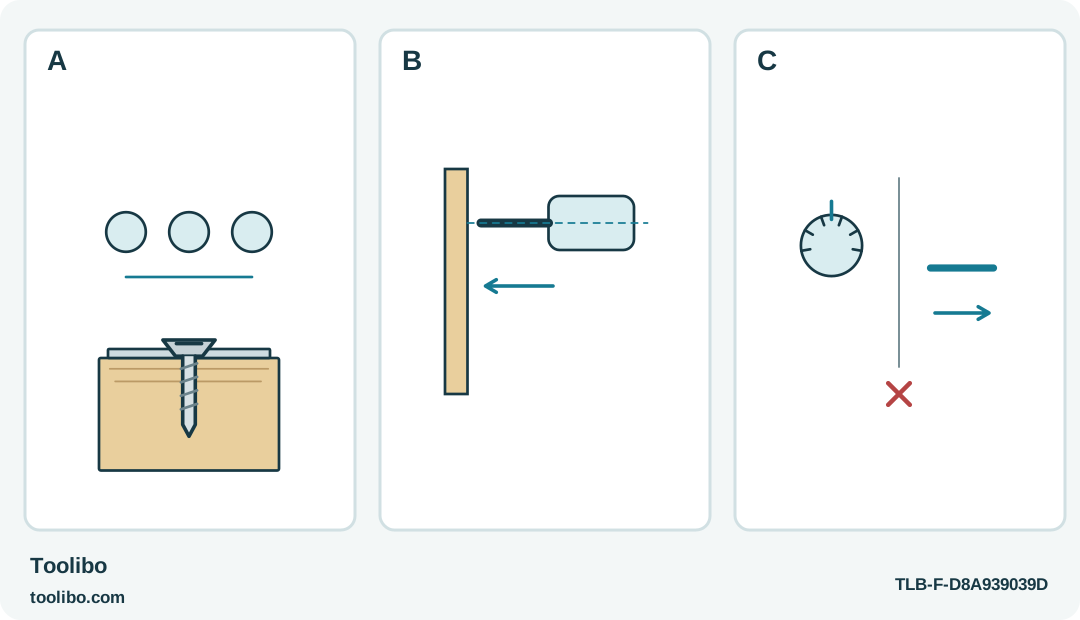
A
WX240L’s three selections adjust torque, not three motor speeds.
B
WX252L reach follows the screw axis; it does not turn the drive around a corner.
C
Compare the actual tightening and access problems independently, with model-specific charging and controls.
One tool offers torque selections and the other extra straight-line reach; neither feature substitutes for the other at an awkward fitting.
Name the job that is difficult
Two compact screwdrivers can look equally suitable in a tool drawer while solving different problems at the furniture. The US WORX WX240L offers three torque selections. The US WX252L uses an extending shaft arrangement that helps with certain recessed screws. Start by deciding whether your difficulty is controlling tightening or physically reaching the screw in a straight line.
Use a real example from the jobs you expect to do. A small bracket on an open panel may be easy to reach but sensitive to over-tightening. A recessed fastener may be robust enough yet inaccessible because the tool body strikes an adjacent surface.
Neither example justifies a universal winner. A driver selected for access still needs a suitable screw and bit; one selected for torque adjustment still needs enough physical clearance. Keep the comparison tied to ordinary, visible, non-electrical household work.
What WX240L adds to the decision
The WX240L’s three selections are torque settings, not three separate mechanical speed gears. That distinction matters when reading a short product description. The useful question is whether a lower starting level and a controlled trial help you seat the actual screw without damaging its fitting.
Begin with a conservative selection on a representative sample where possible. Observe the joint and adjust only after checking the result. The settings are not a calibrated torque scale to copy to another tool, and they do not make an incorrect screw safe for a thin panel.
If your usual work has open access and repeated small screws, this control may be more relevant than an extending nose. Still check the tool’s grip and bit reach against the final head position. A short body that fits at the start can be obstructed near the end of the drive.
What WX252L adds to the decision
The WX252L’s top slide changes shaft reach. Its offset chuck helps approach some recessed screws, but the driving axis still needs to align with the screw. Do not describe the extension as an angle joint that lets the bit enter a recess diagonally.
Rehearse the approach with the motor off and the tool locked. Check the extended and retracted arrangement against the complete screw travel, including space for your hand and a clear withdrawal path. More reach is useful only if the correct bit remains properly supported and the tool can be held steadily.
Do not assume that every bit length or accessory from another WORX model is compatible. Nor should a difficult slow drive be prolonged simply because the extension finally reaches the screw. Stop and reassess when the motor labors, the bit slips or the work moves.
Compare the whole routine, not an isolated number
Both tools require their own charging instructions and suitable equipment. Keep the charger or supply associated with the actual device instead of assuming that two small WORX drivers use interchangeable charging arrangements. A familiar connector is not a compatibility test.
For each candidate, rehearse bit changes, direction selection and storage, using a lock only where that model provides one. Those routine actions often matter more at home than a single maximum figure. A tool that fits the cupboard but not your usual screw approach is not made more useful by an impressive number.
A maximum-torque number alone does not tell you whether the body clears a cabinet edge or a small screw seats neatly. Compare the controls and geometry against your actual fitting, then confirm the setup with a suitable real-material trial.
Make a conditional choice and keep an alternative
Choose WX240L when your main need is a small straightforward driver with selectable tightening levels and your screws are openly accessible. Choose WX252L when its documented extending arrangement solves a specific reach problem that you have checked with the tool inactive.
If you regularly need both functions, consider whether a manual screwdriver or a different properly specified tool is a better answer for the awkward subset of jobs. Do not force one compact driver to cover every cabinet corner, stuck screw and delicate fitting.
Whichever you choose, start screws squarely, use the correct bit, support the work and inspect the finished joint. Release before forcing a fastener through unexpected resistance. The successful purchase is the one that makes those basic actions easier, not the one whose feature list can be stretched to sound most versatile.
Models referenced