
A visible trial is not a torque certificate
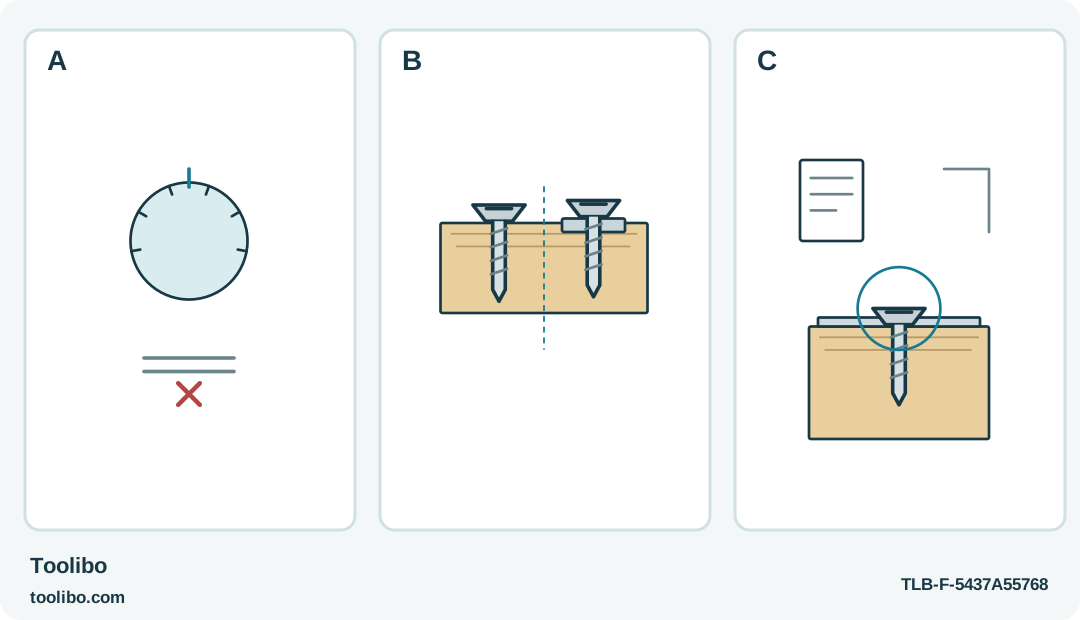
A ring above a crossed equivalence mark, different bearing arrangements in material, and an inspected joint beside a record separate setting from measured result.
A
A numbered clutch position is not a transferable measurement or certification of tightening torque.
B
Screw type, material, hole and bearing surface change the joint response; preserve them in the sample.
C
Record an undamaged seating result and exact setup. A specified calibrated torque requires the prescribed equipment and method.
The sample shows how a particular joint responds, not a certified torque value that can be transferred to another screw or material.
Separate a setting from a specification
A furniture fitting may simply need its screw seated as instructed, while another assembly may require a specified tightening torque and a particular procedure. Those are different tasks. A numbered ring on a compact driver can help limit fastening effort, but its number alone does not demonstrate that a joint meets a numerical specification.
The Makita DF012D and Panasonic EY7410 both offer clutch adjustments. Their instructions use test fastening to establish a suitable setting for the actual material and screw. This guide explains that practical trial process; it does not supply torque values for structural, electrical, vehicle or other safety-critical assemblies. If the job specifies calibrated tightening, use the required equipment and method.
What changes when the joint changes
A screw running through a clearance hole into a threaded fitting behaves differently from one cutting into wood. Surface coatings, hole condition, fastener type and the point where the head bears can all change what you feel and see. A setting that worked on one spare piece therefore needs a new assessment when those conditions change.
The tool can respond to resistance without knowing whether the fitting is properly aligned. A wrong-length screw can meet a bottom or obstruction while the head remains proud. A damaged hole can allow continued turning with little useful grip. Neither situation is solved by declaring that the clutch reached its chosen number.
Keep speed and clutch behavior distinct
Before adjusting the DF012D setup, switch off, set the lock lever to B and remove the battery. For a controlled DF012D sample trial, use gear 1, low speed, and a suitable low numbered clutch setting. The drill-symbol position does not provide the same clutch action. Change the gear only while stopped, and remove the battery before changing accessories or adjusting the setup.
The EY7410 also requires attention to gear and clutch conditions. Its high-speed clutch guidance limits the selected setting, and low battery power can interfere with automatic shutoff at high settings. These conditions are another reason not to treat a ring position as a universal calibrated result. Keep its switch locked when not operating and use the specified battery and charging arrangement.
Build a sample that can answer your question
Use a supported piece of matching material with the intended screw and fitting arrangement. Reproduce the important hole preparation and contact surface; do not use an unrelated screw simply because it is available. Wear eye protection and keep hands clear of the screw’s possible exit and the rotating bit.
Start with a conservative setting, drive cautiously and release the control at the intended seating condition or the tool’s limiting action. Inspect the material and fitting before making any adjustment. If a sound screw stops short, a carefully changed setting may be tested on another appropriate sample. If the surface crushes or the recess slips, reject the setup rather than calling that the upper end of an acceptable range.
Record an outcome you can inspect
Write down the tool, gear, clutch position, screw and sample material together. Add what counted as success: an evenly seated head, an undistorted fitting and no split or stripped material. A photograph can preserve those visible details better than a note containing only a ring number.
Do not label the result with an exact torque unless the required measurement method actually established it. A manufacturer chart may help explain the tool, but it does not convert every fastening into a verified measurement. Nor should you convert a Makita setting into a Panasonic setting by matching numbers or choosing the nearest-looking mark.
Know when the clutch is not the decision tool
If the assembly instructions require a particular torque, tightening sequence or inspection standard, follow those requirements rather than improvising a clutch trial. A compact driver might be unsuitable for the final tightening stage even when it is convenient for other work. Do not use this guide to decide which safety-critical fasteners can be tightened by feel.
For an ordinary permitted household task, the sample remains a starting point. Watch the first real fastening and stop if it behaves differently. The useful achievement is a repeatable, undamaged joint within the maker’s instructions. The clutch supports that process; it does not certify the joint simply because the motor stopped.
Models referenced