
Three detergent routes, one clean-water inlet
Three detergent routes, one clean-water inlet — numbered controls and physical routes explained by the legend.
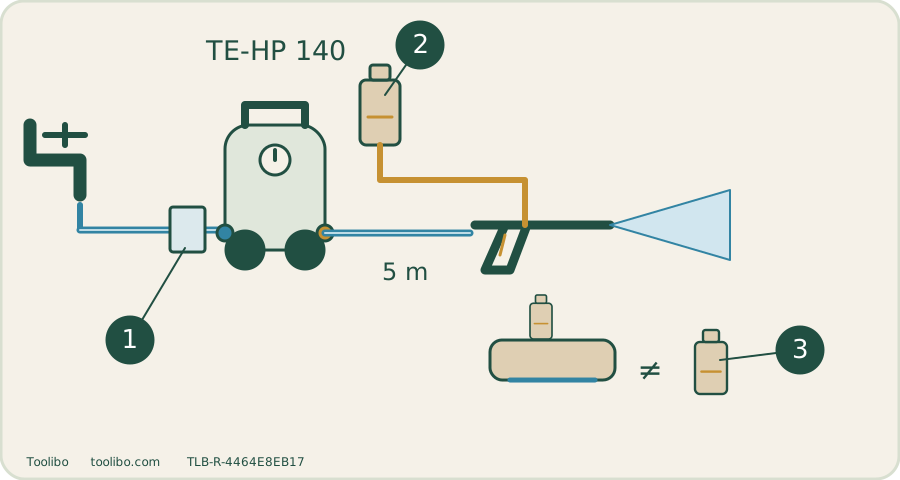
Supply
Clean water through inlet filter
Machine tank
Low-pressure lance or brush
Local container
Patio cleaner or foam attachment
Original explanatory diagram; not a dimensioned service drawing.
What is actually in this configuration
This guide covers German/EU article 4140760, TE-HP 140. The package combines a 5 m high-pressure hose and reel with a variable jet lance, rotating nozzle, washing brush, foam attachment and patio cleaner. The water-supply hose is a separate item. A reel solves storage, not reach: walk the proposed cleaning route before choosing the machine position.
For example, place the machine beside a small patio with its electrical connection outside the runoff path. If the hose must wrap around furniture to reach the last corner, move the furniture or plan a second machine position. Do not count the garden hose as extra gun reach, and do not pull the washer along by the pressure hose.
Read the two pressure figures correctly
The 1900 W machine has a rated pressure of 100 bar and a maximum permissible pressure of 140 bar. Rated flow is 5.8 L/min, or 348 L/h; the product page’s maximum delivery is 420 L/h. These are different labels, not conflicting promises. Neither flow value is a separately established minimum tap-supply requirement.
That distinction changes a purchase comparison. Put rated figures beside rated figures, then compare hose routing and attachments. Multiplying the biggest pressure by the biggest flow does not establish a measured cleaning result, nor guarantee that both maxima occur together. Here, useful capability includes applying detergent correctly, not simply producing the highest headline number.
First start: water before motor
- With the switch off and plug disconnected, stand the washer on a firm, level surface and fully unwind the pressure hose. Connect the gun and press-and-turn the selected attachment into its lock; verify it cannot come loose.
- Use a reinforced inlet hose at least 6 m long and at least 1/2 inch internal diameter, with the appropriate backflow protection for the drinking-water connection. Keep inlet water within 40 °C and inlet pressure within 7 bar. The inlet filter must be present and clean.
- Open the tap, release the gun safety and squeeze the trigger to discharge trapped air. A continuous water stream is the checkpoint before motor operation. If flow remains absent or interrupted, switch off and resolve the supply or kink rather than repeatedly trying the motor.
- Confirm the rating-plate supply and suitable protected outdoor electrical arrangement. With the switch still off, connect the plug; then switch on, hold gun and lance securely, and make a small surface test before expanding the cleaning area.
Choose a sound, inconspicuous test area. Compare the cleaned patch with the adjacent wet surface: lifting finish, exposed aggregate or damaged joints means stop, not another closer pass. A test tells you about that surface; it does not certify all similar-looking paving.
Why a full detergent tank may produce only water
The lance has separate adjustments for spray shape and low/high pressure. Filling the built-in tank does not force detergent into every spray setting: its detergent draw requires low-pressure operation. The washing brush is also a low-pressure detergent attachment. The patio cleaner has its own container and dosing control; the foam attachment is another distinct route.
For a first detergent trial, identify the container belonging to the attachment, use a pressure-washer-compatible product at its labelled dilution, and test on a small area. If plain water continues, check the selected route and low-pressure setting before adding more concentrate. More chemical cannot correct the wrong fluid path. Do not combine cleaners or feed detergent through the clean-water inlet.
End the job without leaving a live standby machine
Releasing the trigger puts this machine into standby; squeezing it can restart the motor. Switch off and disconnect power before adjusting attachments or inspecting the inlet. Shut the supply and release trapped pressure before removing or changing an attachment or uncoupling the hose. Clean the inlet sieve with water when needed and keep the exterior and ventilation clear.
A damaged cable, hose or unreliable gun is a stop condition, not a reason to tape over a defect. Arrange qualified service rather than opening the electrical enclosure. Store the drained equipment dry and above freezing; check its exact draining instructions rather than extending an unfamiliar pump-running procedure.
Who should choose this kit
It suits a household that can use its included cleaning attachments within a manageable 5 m working route. Before buying extra accessories, list the tasks each supplied attachment already covers. A buyer mainly needing greater reach should compare the TE-HP 170’s factory 10 m arrangement, not assume this reel holds an interchangeable extension system. Neither machine is the right answer if the water supply, safe electrical position or surface suitability is unresolved.
Models referenced