
Clean outside, not through the vents
Battery separated from drill, cloth wiping vent exterior, and a crossed-out probe entering an opening.
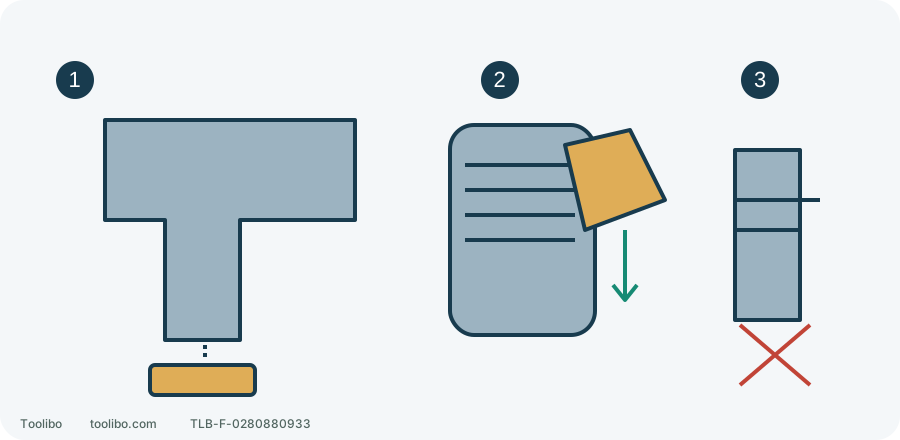
1. Safe isolation
Stop and remove the battery only when safe to handle.
2. Exterior wiping
Use the permitted cloth method without dripping or pushing dirt inward.
3. No inserted tools
Do not probe vents, switches or electrical openings.
For stable equipment with ordinary accessible surface dirt only. Suspected hazardous contamination or internal blockage needs another handling plan, not stronger air or probing.
Decide whether ordinary cleaning is appropriate
Do not approach a smoking, leaking or increasingly hot battery to remove it for cleaning. Unknown dust, suspect coating residue or chemicals need the site’s contamination procedure, not dry brushing on an ordinary table. These steps are for stable equipment cool enough to handle and known everyday dirt.
Locate the dirt first. Surface dust and grip film may permit ordinary cleaning. Hard debris deep inside an opening, water ingress, corrosion or stuck controls may require service. Seeing dust inside is not permission to remove a cover or probe with wire.
Prepare materials and isolate
Release, wait for full stop, remove the pack and normally remove an accessory only when safe to handle. A charger requires its own unplugging/cleaning instructions; do not leave it powered beside a wet cloth.
Prepare a clean soft cloth, a dry finishing cloth and a model-permitted cleaner. Milwaukee 3403-20/3404-20 permits mild soap with a damp cloth for exterior cleaning, without immersion or liquid entering the tool. Make the cloth non-dripping; do not spray openings. This does not authorize soap on every brand, battery contacts or inside chargers.
Bosch GSR12V-300 warns that gasoline, chlorinated cleaners, ammonia and ammonia-containing household detergents can damage plastic. Fast degreasing is not a reason to choose strong solvents or combine two brands’ instructions into a stronger mixture. Leave an unconfirmed cleaner unused.
Work from housing to grip to opening edges
- Support the isolated tool and wipe accessible housing in small zones with the permitted cloth. Do not gather dirt at gaps or flush stubborn deposits inward with more liquid.
- Wipe exposed grip, trigger surface and direction-control surroundings. Aim for a dry nonslippery grip, not water squeezed into controls. Do not stuff cloth into switch gaps.
- In good light, clear accessible dust at vent edges without inserting pointed objects, swabs or metal tools. If this model permits a brush, use it externally without driving blockage inward.
- Wipe and inspect only the permitted chuck exterior, without oil or solvent to disguise sticking. Accessible plastic around pack rails is different from contacts: do not extend housing care into terminal sanding or spraying.
- Finish with the dry cloth. Check for moisture, slippery soap film and lint. Restore the dry safe-to-use condition required by the instructions before proceeding; never fit a pack for a wet test.
Compressed air is not the default next step
Visible dust does not authorize blasting vents. Air can drive debris deeper or disperse settled dust. Consider it only if the exact manual permits it and applicable pressure, protection and dust requirements can be met. No universal pressure is specified here.
Do not run the motor to blow itself dry or bake the tool beside a heater. Liquid ingress, internal blockage or abnormal controls mean keep it unavailable and arrange the required inspection.
Accept only the exterior result
Swipe or scroll horizontally to see all columns.
| Result | Next step |
|---|---|
| Dry grip, clear exterior edges and no residual moisture | Complete normal accessory/control/battery preparation before use |
| Deep blockage or abnormal trigger/selector movement | No probing or repeated powered checks; arrange inspection |
| Cracks, corrosion, ingress evidence or recurring odour | Keep out of use, record and contact service |
Keep the finger off the trigger before reinstalling and securing a compatible pack. A clean exterior is not electrical inspection approval and does not resolve previous heat or noise. If these remain, cleaning is finished; investigate the cause instead of wiping harder.