
Volume, shared setup, disposal route
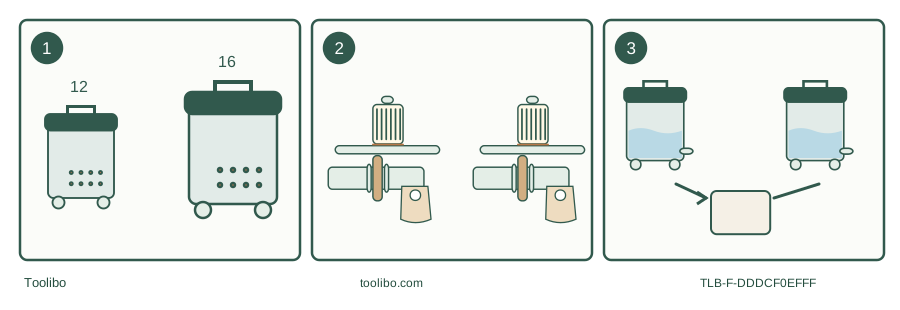
Two drum volumes, a shared seal-check method and a planned waste route appear in three panels.
CMXEVBE17594
- 12-gallon drum; 2-1/2-inch hose; Qwik Lock cartridge plus dry collection bag; SP7075-1 wet/dry procedure.
- CMXEVBE175940; 02/2019, full manual downloaded. Cover and printed 5/17 identify CMXEVBE175940 and CMXEVBE175950. Printed 8–10 operation/float/drain/moving; 12–14 filter/bag/cleaning. Shared PDF includes other sizes; do not import 20-gallon-only kit.
CMXEVBE17595
- 16-gallon drum with drain; shared SP7075-1 procedure; exact manual kit used instead of mismatched product Includes block.
- CMXEVBE175950; 02/2019, full manual downloaded. Cover and printed 5/17 identify CMXEVBE175940 and CMXEVBE175950. Printed 8–10 operation/float/drain/moving; 12–14 filter/bag/cleaning. Shared PDF includes other sizes; do not import 20-gallon-only kit.
Nominal volume
12 and 16 gallons describe the drum, not guaranteed liquid collection.
Shared method
Both manual columns use Qwik Lock filtration and dry bags; match exact replacements.
Whole job route
Choose manageable batches and a suitable receiving point before filling.
Nominal volumes only; schematic does not show a measured usable liquid limit.
One manual family, two different ownership plans
The US CRAFTSMAN CMXEVBE17594 and CMXEVBE17595 belong to the same SP7075-1 manual family. Their full identifiers are CMXEVBE175940 and CMXEVBE175950, respectively. The first has a nominal 12-gallon drum and a 6.0 peak-HP label; the second has a nominal 16-gallon drum and a 6.5 peak-HP label. This comparison does not turn those labels into a suction ranking.
The manufacturer’s gallon footnote concerns drum volume, not necessarily available collection capacity. Its peak-horsepower explanation concerns laboratory motor output rather than sustained working output. To choose between these models, examine the cleanup route, consumables and disposal arrangement before giving the larger numbers much weight.
What genuinely stays similar
Both matched manual columns list a hose, two extension wands, utility, car and wet nozzles, a Qwik Lock cartridge and a disposable collection bag. Both have the shared head, latch and filter procedure described in SP7075-1. The 12-gallon official page identifies its 2-1/2-inch by 7-foot locking hose. The exact manual’s model-specific parts and contents, rather than a generic shopping image, should determine replacements.
Do not choose the 16-gallon version expecting the 20-gallon column’s extra crevice tool or muffler to appear automatically. Likewise, the current CMXEVBE17595 web page’s Includes block describes an inconsistent 5-gallon kit; it cannot be used as evidence of a smaller hose or foam-filter package for the 16-gallon model. If a seller’s bundle adds accessories, treat that as a separate package claim requiring confirmation.
The shared cartridge fastening is convenient for an owner who learns one installation method, but matching fastening style is not a complete compatibility test. Bag size and the inlet collar seal still need the right model reference. Keep the old part number and the full nameplate identifier when restocking.
Where the bigger drum changes the decision
For loose, ordinary dry debris, more nominal drum space may mean a different emptying schedule. It does not predict how long a filter will remain clear, how a bag handles sharp pieces, or how much the contents weigh. A partly filled drum of dense debris can be harder to handle than a fuller drum of light material.
Walk the actual disposal route. Is there a step out of the workshop? Does the machine have to be lifted into a vehicle? Is the waste container high enough that pouring requires lifting above a comfortable height? These questions can favour a smaller batch size regardless of which model you buy. The 16-gallon body’s additional volume is useful only if the entire collection-and-emptying cycle remains manageable.
For suitable liquids, both setups need a planned receiving point. A drain reduces the need to tip a drum for liquid release, but does not remove the need to disconnect power, control the flow and replace the cap. Nor does it make every nearby floor drain an acceptable disposal destination.
Their wet-mode instructions are shared, not universal
In SP7075-1, a cartridge may remain installed for small liquid amounts; removal is recommended for larger amounts to avoid saturation and misting. Dry collection bags are for dry debris only. Keep the cage and float installed during wet operation, and return to dry work only with appropriate dry filtration.
The float stops airflow at its operating level while the motor can continue to run. On either model, lost suction with a higher-pitched motor sound means switch off, unplug and empty. Do not assume a bigger nominal tank gives you extra time to ignore the signal.
This shared procedure is tied to the checked manual revision. It should not be copied to other CRAFTSMAN vacuum families or another brand. In particular, a foam-wet-filter requirement or a cartridge-retained requirement from another manual must not be silently merged into these instructions.
A practical decision without a declared winner
Choose around where the vacuum will be used and how the waste leaves that space. The 12-gallon model is worth considering when a smaller drum better fits your route and planned batches. The 16-gallon model is worth considering when the additional nominal room fits your ordinary debris jobs without creating a lifting or storage problem. Measure the actual machine or verified dimensions before committing a narrow shelf or vehicle space.
Neither option is approved here for hazardous dust, flammable liquid, hot ash or unidentified contamination. Price, current availability and cleaning performance have not been tested. The most useful final check is a complete setup list: exact model, matching manual, correct dry consumables, wet-job configuration, and a suitable disposal route.
Models referenced