
Three published body lengths
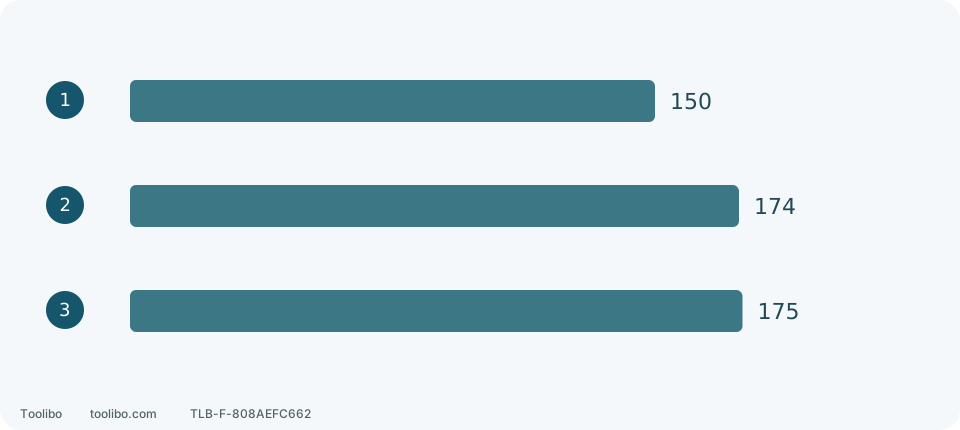
Proportional bars compare 150, 174 and 175 mm body lengths.
XFD15Cordless drill/driver
- 18V LXT; match the exact approved Star-marked battery.
- Sub-Compact driver-drill; clutch positions 1–20 plus drilling.
- XFD15ZB — US listing
XFD16Cordless drill/driver
- 18V LXT; match the exact approved Star-marked battery.
- Driver-drill; clutch graduations 1–21 and an all-metal self-ratcheting chuck.
- XFD16Z — US listing
XPH16Cordless hammer drill/driver
- 18V LXT; match the exact approved Star-marked battery.
- Hammer driver-drill; adds hammer mode and an all-metal gear housing.
- XPH16Z — US listing
1 · XFD15
150 mm
2 · XFD16
174 mm
3 · XPH16
175 mm
Dimensions are mm and exclude your projecting bit. The 1 mm difference alone does not establish better access.
Shared platform, different working ranges
Sub-Compact XFD15 is still 18V LXT, not 12V max CXT. All three need exact approved battery and charger matches; brand and slide-on appearance are insufficient. These are US models, not automatically equivalent regional names.
Swipe or scroll horizontally to see all columns.
| Item | XFD15 | XFD16 | XPH16 |
|---|---|---|---|
| Modes | Drilling, driving | Drilling, driving | Drilling, driving, hammer drilling |
| Chuck | 13 mm | 13 mm | 13 mm |
| Specified metric length | 150 mm | 174 mm | 175 mm |
| No-load low/high speed | 0–500 / 0–1,700 rpm | 0–550 / 0–1,800 rpm | 0–550 / 0–1,800 rpm |
| Steel drilling | 13 mm | 13 mm | 13 mm |
| Wood auger / self-feed / hole saw | 36 / 35 / 51 mm | 38 / 51 / 51 mm | 38 / 51 / 51 mm |
| Wood screw specification | 6 × 75 mm | 10 × 90 mm | 10 × 90 mm |
| Masonry hammer drilling | No such mode | No such mode | 16 mm |
| Published maximum torque | 350 in-lb | 970 in-lb | 970 in-lb |
Read capacities by accessory category, not simply whether the chuck grips. US product pages round both larger models to 6-7/8 inches, while metric specifications differ by 1 mm. Neither identical shape nor a useful confined-space advantage follows from that alone. Maximum torque does not predict proportional speed, hole count or life.
Cabinet hardware: check whether XFD15 is enough
Hinges, drawer slides and small pilot holes between partitions often face an opposing-panel obstruction. XFD15 is approximately 24–25 mm shorter. If the task and accessory are within its range, that difference is worth measuring.
Measure usable distance along the hole axis. With power disconnected, assess the selected battery and actual bit, allowing for hands, feed and withdrawal. Fitting inside does not establish straight alignment or control of reaction. If every candidate requires badly angled drilling, change the assembly order or choose an appropriate tool. Compact naming does not prevent a battery hitting the cabinet floor.
Without a real larger-accessory need, headline torque alone need not force an upgrade. Matching bits and low-clutch trials matter first for furniture screws. The clutch is not a calibrated torque wrench; specified-torque connections need their required procedure.
Larger wood accessories: name the category
A known 45 mm self-feed requirement exceeds XFD15’s listed 35 mm range. XFD16’s 51 mm makes it a candidate; XPH16 also lists 51 mm. With a 45 mm hole saw, all three listed diameters cover the task, so do not transfer the self-feed conclusion to a different accessory.
Write bit type, cutting diameter, material and depth, then check capacity, speed, gripping and work-support requirements. The 6 × 75 and 10 × 90 mm screw specifications also describe different ranges, not permission to drive every screw in any material at maximum speed without preparation.
If ordinary rotary tasks require the larger range but no hammer mode, XFD16 is a direct candidate. XPH16’s extra mode does not enlarge the wood and steel capacities it shares with XFD16.
Masonry: XPH16 adds a mode, not universal permission
Identify wall material, hole diameter/depth, fixing and workload, plus hidden services, rear clearance and necessary dust controls. Do not make exploratory holes in unknown or unsafe locations. The 16 mm masonry capacity does not replace fixing instructions or structural assessment.
Where suitable, XPH16 offers hammer drilling absent from the others. Frequent concrete, larger holes or SDS accessories call for assessing an appropriate rotary hammer or other tool. A three-jaw hammer drill is not an SDS rotary hammer. Wood, metal and screws still require their appropriate ordinary modes, not hammer action left on by default.
Put batteries, weight and price back into the real setup
XFD15ZB, XFD16Z and XPH16Z exclude batteries and charger. XFD15SY1B lists one 1.5 Ah pack, LXT charger and bag; obtain exact battery/charger codes from the seller. XFD16T and XPH16T each list two BL1850B 5.0 Ah packs, one DC18RC and bag.
A small one-pack total cannot fairly establish a cheaper drill against a two-pack 5 Ah kit. Existing owners should price actual gaps; new owners should price complete setups. US pages list XFD16 and XPH16 at 4.65 and 4.9 lb with 5 Ah batteries. Different XFD15 battery configurations do not produce a same-condition ranking, and accessories/posture also affect handling.
Your final reason should be concrete: “This tool’s modes, accessory range and complete setup suit this hole in this location.” If the reason is only maximum torque or the fullest box, return to the task list.
Models referenced