
Three different things can need holding
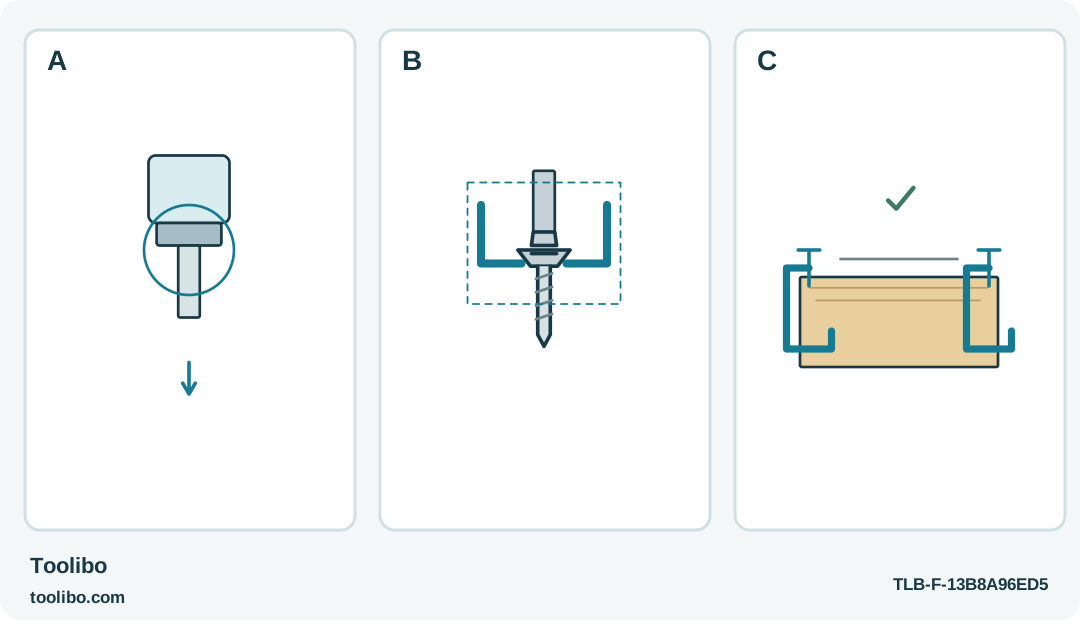
A bit-retention close-up, a jaw-supported screw with an envelope, and independently clamped wood distinguish the three holding jobs.
A
Bit retention secures the accessory in the tool; a magnetic holder does not guarantee retention of every screw.
B
WX255L’s separate jaws support the loose screw and require clearance; they are not a furniture clamp.
C
Restrain the component independently. BDCS20 still requires a compatible single-ended bit.
Accessory retention, support for a loose screw and restraint of the workpiece are three jobs, not one interchangeable holding feature.
Name what needs to be held
A bit holder and a screw holder solve different problems. The first keeps the driving accessory in the tool. The second supports a loose fastener near its head while you position it. Confusing the two can lead to a disappointing purchase: a magnetic bit spindle does not promise to hold every screw securely, especially when the screw or accessory combination is unsuitable.
The US WORX WX255L includes a separate screw-holding arrangement alongside its bit-cartridge system. The BLACK+DECKER BDCS20 uses a simpler magnetic hex spindle for an appropriate single-ended bit. Compare them for an accessible ordinary furniture job, not for work overhead, inside electrical equipment or on a structural connection.
What the extra holder changes
On the WX255L, the screw support sits around the fastening area and needs room to operate. Before selecting it for a recessed fitting, consider the space occupied by the holder as well as the length of the bit. A screw may be reachable by the bit while the surrounding jaws cannot fit through the opening.
The BDCS20 has fewer components around the tip, but you must arrange the loose fastener without assuming the spindle magnet will retain it. Starting a screw gently by hand, where the fitting instructions permit, can remove the need to balance it at the powered tip. That preparation is often more important than adding another accessory.
Inspect the actual screw and fitting
Choose the fastener specified for the furniture, including its head and length. Do not substitute a screw merely because a holder grips it more neatly. Check that the bit fully engages the recess and that the fastener can follow the intended hole without pulling the parts sideways.
Place the fitting in position while the driver is stopped and locked. Identify where your free hand will be when the screw starts. It should support or steady the already restrained assembly from outside the bit path, not sit behind a thin panel where the screw may emerge. Wear eye protection and remove loose clothing or hair from the rotating area before powered work.
Rehearse holder clearance without power
- Set up the tool with its control locked and charging lead disconnected. On the WX255L, use the specified holder assembly and cartridge procedure; do not improvise a replacement jaw or cartridge.
- Place the intended screw and bit in their correct positions and approach the supported fitting without starting the motor.
- Check that the holder, tool body and gripping hand all have clearance as the fastener advances.
- Withdraw along the same axis. If the support catches an edge or forces the bit sideways, change the access plan before driving.
On the BDCS20, insert the appropriate single-ended bit directly into its spindle and check the fit. Double-ended bits are excluded for this model. Do not tape a loose fastener to a spinning accessory or grip it with fingers as the motor starts.
Judge the whole fastening sequence
A screw holder may reduce the awkward balancing stage at the beginning, but the joint still needs a correct finish. Start cautiously, stop to inspect alignment and release the control at the seating condition required by the furniture instructions. A holder does not tell you when the panel is compressed or the screw has lost its grip.
The WX255L’s cartridge also changes how bits are selected. If the cartridge will not rotate, do not force it; the cover must be in the specified fully open position. That is a stopped-tool setup issue, not something to correct with the tool engaged on a screw. The BDCS20’s direct bit change is simpler, but you must keep track of the loose bits yourself.
Choose for the access you repeatedly use
If many of your ordinary jobs begin with loose screws in open, visible fittings, the WX255L holder may address a real inconvenience. If most screws can be started by hand and the surrounding space is tight, a simpler tip arrangement may be easier to accommodate. These are workflow differences, not a claim that one tool makes a stronger joint.
Keep a small container nearby for removed screws and bits. Secure the work independently of either holding system, and stop if a screw binds, a bit slips or the control becomes unreliable. The successful choice is the one that lets you place, drive, inspect and withdraw in a controlled sequence without adding a new obstruction around the fastening.
Models referenced