
Similar clutch ideas do not mean identical stopping
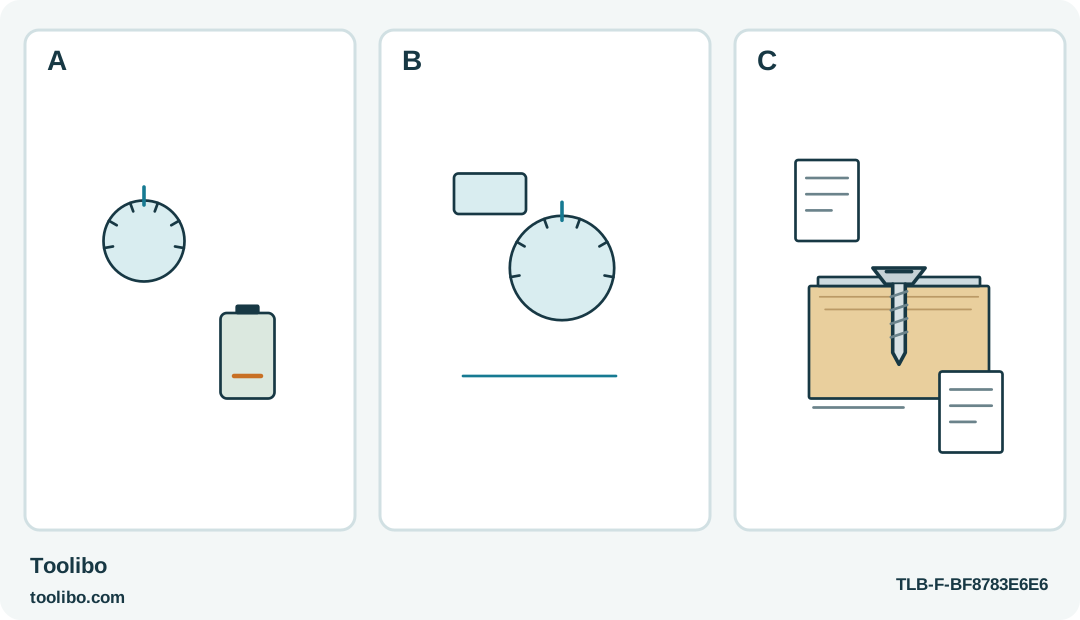
A ring beside a low-charge symbol, a separate gear-and-ring arrangement, and a joint with two records distinguish model-specific stopping conditions.
A
EY7410 high gear is limited to clutch 10 or below; reduced battery power can impair automatic shutoff at high settings.
B
DF012D uses its own gear/clutch chart; begin the controlled sample in gear 1 with a numbered clutch, not drill bypass.
C
Match the sample and inspect the result separately for each tool. Ring numbers are not equivalent calibrated torque values.
Similar-looking adjustment rings do not promise the same automatic stop, especially when gear choice and remaining battery power differ.
Begin with a careful fastening problem
A small screw in a delicate fitting is a better comparison case than a headline maximum-torque figure. The European Panasonic EY7410 and US Makita DF012D both provide adjustment, but careful fastening still begins with the correct screw, sound material and a known final seating condition.
Use an accessible, supported, non-electrical assembly for this comparison. If the joint requires a specified measured torque, plan to use the appropriate controlled tool and method. A compact driver’s numbered clutch is not automatically a calibrated torque wrench.
Keep the regional identities clear. EY7410 kit suffixes and the DF012DSE package name describe equipment combinations around their respective devices. They do not establish that batteries, chargers or settings transfer between the two brands, or between every regional version.
Understand Panasonic’s shutoff caveats
The EY7410’s high-speed use calls for clutch 10 or below. It also warns that automatic shutoff may become inoperable at high clutch settings when battery power drops. Those conditions belong in the buying and working decision, not in a note you discover after a delicate screw has been over-driven.
If this model suits your work, make a habit of choosing the gear with the motor stopped, beginning with a conservative trial and responding to a low battery before pressing on with the same assumptions. Recharge through the specified system rather than demanding one more difficult fastening from a depleted pack.
The clutch chart is a reference, not a guarantee for every material and screw. A numbered setting that works on one sample must be reconsidered when the screw, material, preparation or required seat changes.
Understand Makita’s numbered and bypass positions
The DF012D provides numbered clutch positions 1 through 21 and a separate drill symbol that bypasses the clutch. The drill position is not a higher-confidence way to finish a delicate fastening. For the controlled trial, use gear 1, low speed, and a conservative numbered clutch setting. Stop the motor before shifting and fully engage the gear lever. Do not assume automatic stopping across every high-gear setting: Makita’s chart marks high-gear operation at 1, 5 and 9, but not at 13, 17 or 21.
When the clutch stops the motor, release the operating control and inspect the joint. Do not keep pressing or assume that a stop always means the fastener is correctly seated. It may have reached resistance before the intended endpoint because the parts or screw are wrong.
This difference in control detail is more useful than assuming that two rings with similar numbers behave identically. Do not translate a Panasonic setting directly to Makita, or use either tool’s approximate range to claim a measured assembly result.
Compare the complete setup in your hands
Both tools need the correct bit and secure retention. Remove the battery and use the required lock arrangement before handling accessories. Fit the compatible shank through the holder’s intended sleeve or collar action, let that control return and check that the bit is retained.
Check tip fit separately at the screw. A retained bit with the wrong recess shape can still slip when the load rises. Rehearse the body and handle clearance with the tool inactive, including the final position of the head and the space needed to withdraw the tool straight.
Consider how you will store and identify each battery system. If a household already uses several small cordless tools, clear separation of the chargers and packs is more valuable than a presumed convenience based on similar size. Do not select a replacement component by appearance alone.
Choose a repeatable process rather than a winner
Prepare a representative sample with the actual screw and observe the finished joint at a conservative setting. Look for correct seating without crushing, splitting or a damaged recess. If the sample fails, determine why before increasing a setting or changing gear.
For repeated identical fittings, preserve the proven setup but continue checking the work. Stop on slipping, unexpected resistance, abnormal heat or a change in tool behavior. Neither driver should be forced through a problem just because its clutch normally makes small fastening convenient.
The EY7410 may suit a user comfortable maintaining its explicit high-gear and battery-related shutoff boundaries. The DF012D may suit a user whose routine fits its own clutch, gear and battery arrangements. The sensible choice is the exact system you can operate, maintain and verify consistently, not a universal verdict inferred from similar controls.
Models referenced