
Same diameter does not mean interchangeable adhesive
Separate high and low adhesive systems show equal-width stick symbols, while the material trial places adhesive on backing beneath foam.
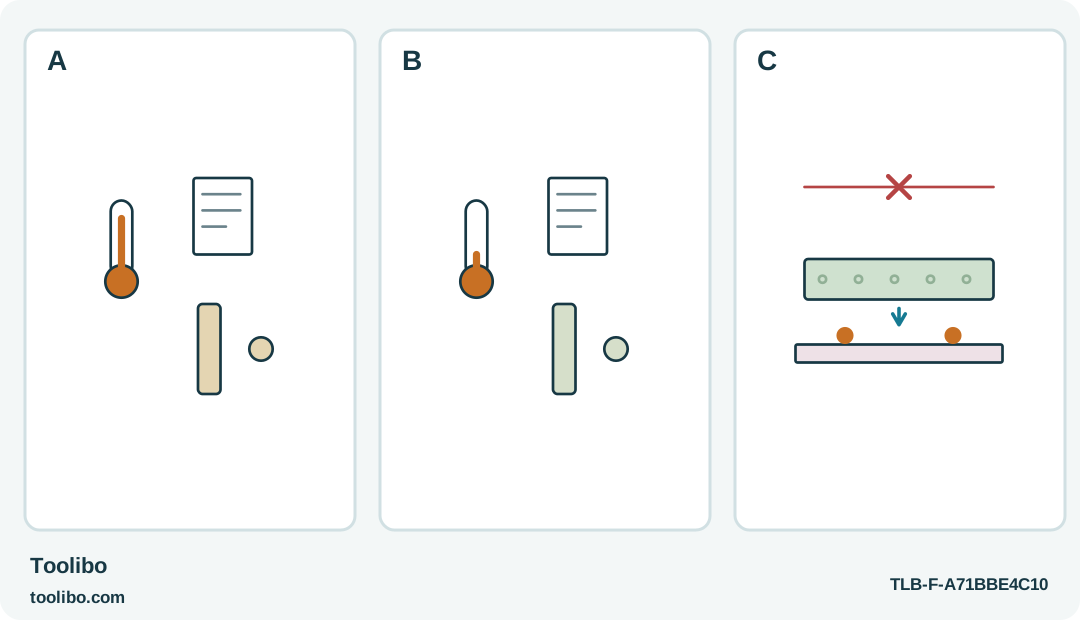
A
The ordinary 1007 uses its specified approximately 170°C system; that higher processing temperature is not a bond-strength ranking.
B
The 1007-LT requires its dedicated approximately 85°C sticks. Matching 7 mm diameter does not permit cross-loading.
C
For a permitted foam trial apply to supported backing, not directly to foam. Inspect the actual materials after cooling with either system.
Equal stick diameter masks two different adhesive systems, while both still require a successful material trial.
Start with the most sensitive part
Suppose a desktop decoration combines a firm wooden backing and a thin foam accent. The backing is not necessarily the deciding material. The vulnerable foam, its surface coating and the required joint shape may determine whether a hot-melt approach is sensible at all. List every surface that will meet the adhesive before choosing the gun.
For the German-market STEINEL models, the ordinary GlueMatic 1007 operates at approximately 170°C and the GlueMatic 1007-LT at approximately 85°C. Both accept a 7 mm stick format, but the LT system requires its dedicated original low-temperature sticks. Matching diameter alone is not compatibility. Do not share an unlabelled bag between the two tools.
These are choices for small, nonstructural indoor household and decorative work. Neither temperature turns hot melt into a universal answer for heavy loads, safety equipment, electrical repairs or food-contact items. If failure would injure someone or damage something valuable, select an appropriate specified attachment system instead of deciding between these two guns.
Understand what the lower temperature changes
The LT model gives a lower-temperature option for delicate craft materials such as suitable foam and film. That can make it the more relevant system to investigate when heat damage is the main concern. It does not guarantee that a thin film will stay flat or that every foam chemistry will accept the adhesive.
The ordinary model serves conventional compatible hot-melt work with the adhesive specified for that tool. Its higher operating temperature is not a published strength ranking against the LT model. Bond performance still depends on formulation, both surfaces, contact, timing and the way the finished item is used.
There is also a handling difference that temperature does not erase: the nozzle and fresh glue can burn in either system. The 85°C model is not a cold applicator, a finger-safe glue dispenser or permission to hold delicate work in your palm. Both need a supported workpiece, a heat-resistant working area and a stable place to rest while hot.
Compare the whole adhesive-and-material combination
Prepare representative scraps of the actual project. If comparing systems, identify each sample and keep the appropriate adhesive with its own gun. Do not use a single unknown stick to make the test appear equal. A fair practical comparison tests each tool with its proper consumable, not an artificial common consumable that one tool cannot process correctly.
Dry-fit the pieces and decide how much glue is needed to create contact without flooding the joint. Apply adhesive to one side and bring the pieces together promptly. For rigid foam such as polystyrene with the ordinary 1007, apply the hot glue to the supported backing, never directly to the foam. Use the backing-side approach for the LT sample too. Even then, inspect for heat damage after the adhesive has transferred into the joint.
Allow each sample to cool before judging it. Look separately at appearance and attachment: a neat joint that peels cleanly away is unsuccessful, and a firmly attached but collapsed foam decoration is also unsuccessful. Compare the results under normal gentle handling, without assigning a load rating to a small craft trial.
Choose a working sequence you can sustain
If the LT sample succeeds and the ordinary-temperature sample damages the delicate surface, that is a reason to keep this project within the identified LT system. If neither works, change the material or attachment method. Do not increase pressure, extend heating or bury the damage under a larger glue deposit.
If both samples suit a robust decorative joint, consider the practical setup: which specified adhesive you already have, whether it is clearly identified, and whether the gun can rest safely beside the work. A tool’s familiar appearance is less important than a repeatable process with known supplies. Avoid claiming that either model produces a stronger joint solely because it feels hotter or feeds differently.
Prepare all pieces before warming the chosen tool. Use its normal heat-up instructions, then test flow on a suitable waste surface without forcing the trigger. Keep the gun on its support during pauses and unplug it when finished. Neither model should be laid hot on the project to free a hand.
Keep the decision valid next time
Label the successful sample with the exact model, adhesive identity and material combination. Keep that note with the consumable packaging rather than marking a general category such as “foam glue.” A later sheet may have a different finish, and a replacement stick may have a different formulation even when its dimensions match.
Store the 85°C sticks separately and leave no ambiguity for another adult using the workspace. Do not attempt to convert an ordinary 1007 into an LT tool, or compensate for the wrong stick by prolonged heating. If the tool contains unidentified adhesive, resolve that uncertainty before using it on a delicate finished piece.
The useful outcome of the comparison is a defined combination that meets the project’s modest needs. It is not a declaration that low temperature is always better, that hotter glue is always stronger, or that two guns sharing a name and diameter can exchange consumables.
Models referenced